THE HISTORY
THE HISTORY OF DISABLED WORKERS IN THE POTTERIES
Disability
Working opportunities for disabled people in the Staffordshire Potteries were all too limited. Stoke’s “pot banks” were hives of industry, employing men, women and young people but the manufacturers’ desire to generate cash meant that relatively few of them could afford to have a social conscience and so the employment of disabled workers was not commonplace.
The Blind
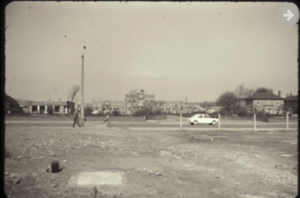
Tom Millington was a visually impaired beggar who lived in Stoke-upon-Trent and who for 35 years begged for coppers by a railway bridge in Stoke. He died, aged 45, in 1916, as a result of a severe cold and ‘getting out of bed in a critical condition.’ He died the next day, illustrating the relative isolation of many disadvantaged people at the time.
A small number of groups were showing an interest in blind welfare by the end of the 19th century and in 1901-2, a blind welfare committee, steered by philanthropists and enlightened industrialists, was set up with the aim of providing classes and workshops that would allow blind people in North Staffordshire to secure knowledge of a trade after leaving school or education. Blind workshops were established, ultimately giving rise to bolder schemes. The City Council’s new, purpose-built Workshops for the Blind were opened in Fenton in 1934, constructed to meet the needs of visually-impaired people. Double, spring-operated doors and guide rails were incorporated as well as recreational facilities.
The Workshops for the Blind were located off what is now City Road on the former site of the Rialto Pottery. The workshops produced a range of goods such as baskets, brushes, knitted goods and bedding as well as articles for the pottery trade. This highly successful social enterprise eventually closed around 2013 with much of the structure being retained and now forming the Rialto Court apartments.
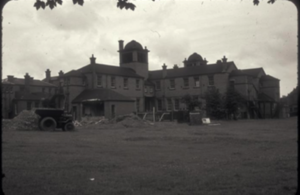
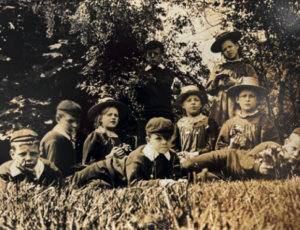
The Mount School for the Blind and Deaf was situated in Penkhull in Stoke-on-Trent. It opened in 1897 and was run by the North Staffordshire Joint School Authority. Its catchment area was wider than just the immediate city, taking pupils from all over Staffordshire and sometimes neighbouring counties. The school was an all-age school, catering for children from the age of 5 up until the age of 16. A nursery school was also later added. In 1949, the school stopped the intake of blind children, who were transferred to Birmingham. It continued to provide education for the deaf until 2000, when the city council decided to close the school and merge the remaining pupils into mainstream education.
Students from the school excelled at physical activities and in 1939, two pupils from the school travelled from London to Stockholm so as to take part in what were then known as the Deaf and Dumb Olympic Games. They played in the British football team.
The Deaf
Local charity dDeaflinks has its origins in the North Staffordshire Deaf and Dumb Society, an antiquated name, which could now be regarded as offensive. Many older people from local Deaf organisation dDeaflinks can remember attending The Mount School, which catered for Deaf, as well as blind people.
North Staffordshire Deaf and Dumb Society was established in 1868 at Hope Street in Hanley by Charles Davies and was originally funded by philanthropy from the surrounding businessmen of the potteries. As Davies discovered, there were many local people who were also deaf and dumb and he made it his mission to find out what provision was being made for them. It may be added here that the noisy conditions in heavy industry were also to trigger hearing issues in some workers.
Local Historian Mervyn Edwards writes:
“What had been referred to as “a dirty, ill-lighted schoolroom in the old Hope Schools at Hanley” was renovated when the society opened its new Church and Institute for the Adult Deaf of the district in a large, rented room that had formerly belonged to the Victoria Pottery in Victoria Square, Shelton.
The premises was divided into two parts. One section was intended for religious/ spiritual activities and the other for social/ educational activities such as lectures and recreation.
The society also aimed to help deaf people into employment, hence much is made in old press reports of the society’s “industrial record.” By 1917, some of the society’s people had remained in the same job for 20-30 years, so it already had a track record. The committee’s aim was to enable the deaf to become and remain good, working, spiritually-strong citizens and to that end they were provided with an organiser, who acted as a guide, counsellor and friend.
Mrs. Wedgwood said that they could not give the dumb power to speak, but they could give them power to understand what was being said. There were at the time, 30,000 deaf people in the UK, with 300 in North Staffordshire.
The church section of the headquarters was used like any other church, with Sunday services and harvest festivals being held there. Local preachers gave sermons, which were interpreted in the deaf and dumb language – often by a gentleman called Joseph Ellis, usually described as the Superintendent and Missioner of the institute.
What were the prospects for deaf young people who had just left school in the early 1930s? One society official explained perfectly well, in holding that the totally deaf, once their schooldays were over, received nothing from public funds. Many had other disabilities but did their best in these adverse circumstances to be self-supporting.
This is where Ellis came in. He was a pivotal figure in the development of the society. Ellis worked full-time as Missioner and Welfare Worker and it was his job to find work for the deaf and then to promote their good behaviour – and the fairness of their bosses – once they were in employment. In 1933 it was reported that in North Staffordshire there were about 280 deaf and dumb workers of whom 172 were in the Stoke area. Of these, only 12 were out of work, which underlines the society’s progress.
It took a lot of effort on Ellis’s part. He was regularly present at the church but received numerous calls for help, also making sick calls and other visits – as did his wife. He made hundreds of approaches to companies on behalf of the deaf people and for similar reasons, visited the local labour exchanges. He was astonishingly successful in securing work for a huge percentage of deaf people, though some were forced to accept an inferior wage on account of their deafness, despite their ability to do the jobs.
With the premises in Victoria Square becoming increasingly inadequate, it was decided to look around for a new site and in 1935, Stoke Council agreed to sell a site in Wellesley St, Shelton at a nominal cost.
By 1936, the prospects for deaf children were at least a little better. There were both provided and non-provided schools for the deaf, funded by Government grants. Local Education Authorities were required to find instruction for children between the ages of 7-16. That said, after leaving school, these children were still out on a limb, having to find employment despite being handicapped or having to be kept by their parents or else apply to the Poor Law – hence Ellis’s efforts on their behalf.
The society had only previously rented premises but its new home of their own – the Church and Institute for the Deaf in Wellesley Street, Shelton – opened in November, 1936.
With a base that properly served its purposes, the society went from strength to strength, as is revealed by newspaper reports of its annual meetings. The dDeaflinks website tells us that the centre was the chief source of support for members, helping them with housing and legal matters, etc.
Ellis and his wife continued to pull out all the stops to ensure that deaf people found employment. Many were able to communicate with their bosses by lip-reading, and it is interesting to note that in 1938, the society remarked that the so-called “oral method” led to far better communication between the deaf and normal people than signing and hand-spelling had achieved. It also improved deaf people mentally.
The centre’s spiritual work progressed as well as the social side, with 40 deaf people attending a holiday camp in the Isle of Man. The centre had also installed a radiogramophone – and some members had learned to dance!
Ellis was from Huddersfield, Yorkshire. He’d already done work with the deaf and dumb in Dewsbury from around 1928 before coming here in 1932, making a huge contribution and ultimately served the society for 45 years, according to dDeaflinks.
He became Chairman of the National Deaf Welfare Board as well as the National Institute for the Deaf Industrial and Social Welfare Committee. He was awarded the MBE in 1958. The Institute in Shelton was renamed the Ellis Memorial Centre for the Deaf in 1976.
Within living memory, the efforts of local figures like Jack Ashley and actress Rachel Shenton have helped us to understand the challenges that deaf people face – but the wisdom of all those people who since the 1830s have highlighted deaf issues in North Staffordshire can, I think, best be summed up by the words of the Ellis Centre’s Principal Ken Scarratt, who spoke to The Sentinel in 1979. He offered:
“Only the deaf themselves can tell of the severity of their handicap, its invisibility, its effect on relationships and its awesome capacity for creating misunderstandings. Deafness affects so many important aspects of a person’s life that his whole ethos can be changed. It’s not a killer disease, but it can destroy. A deaf person finds almost insurmountable obstacles not only in communicating with his fellow men, but in acquiring an education and getting a job to fit his abilities.”
This article first appeared in The Sentinel newspaper on April 13th 2024.
Duchess of Sutherland’s Cripples Guild
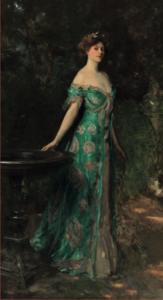
Millicent Leveson Gower, The Duchess of Sutherland, was a socialite and philanthropist. She formed the Potteries and Newcastle Cripples Guild in 1898. This was a time before the word ‘Cripple’ was viewed as offensive as it it is now. The aim was to provide disabled people with a trade so that they could live without charitable aid. The workers of the guild made silver-plated copperware with workshops initially based at the Stately home Trentham Hall. The Cripple’s Guild was a great success due to the quality of workmanship of the disabled workers and soon moved to a factory in Hanley.
The success led to the business being converted into a limited liability company in 1907. Gower commented how all of the workers were disabled and said: “One worker has his feet turned in, but this does not stop him from fashioning exquisite bowls”. The company folded in 1922, having produced “The finest metalwork ever produced by the porrest in society” Historian Sylvia Baddley is quoted as saying.